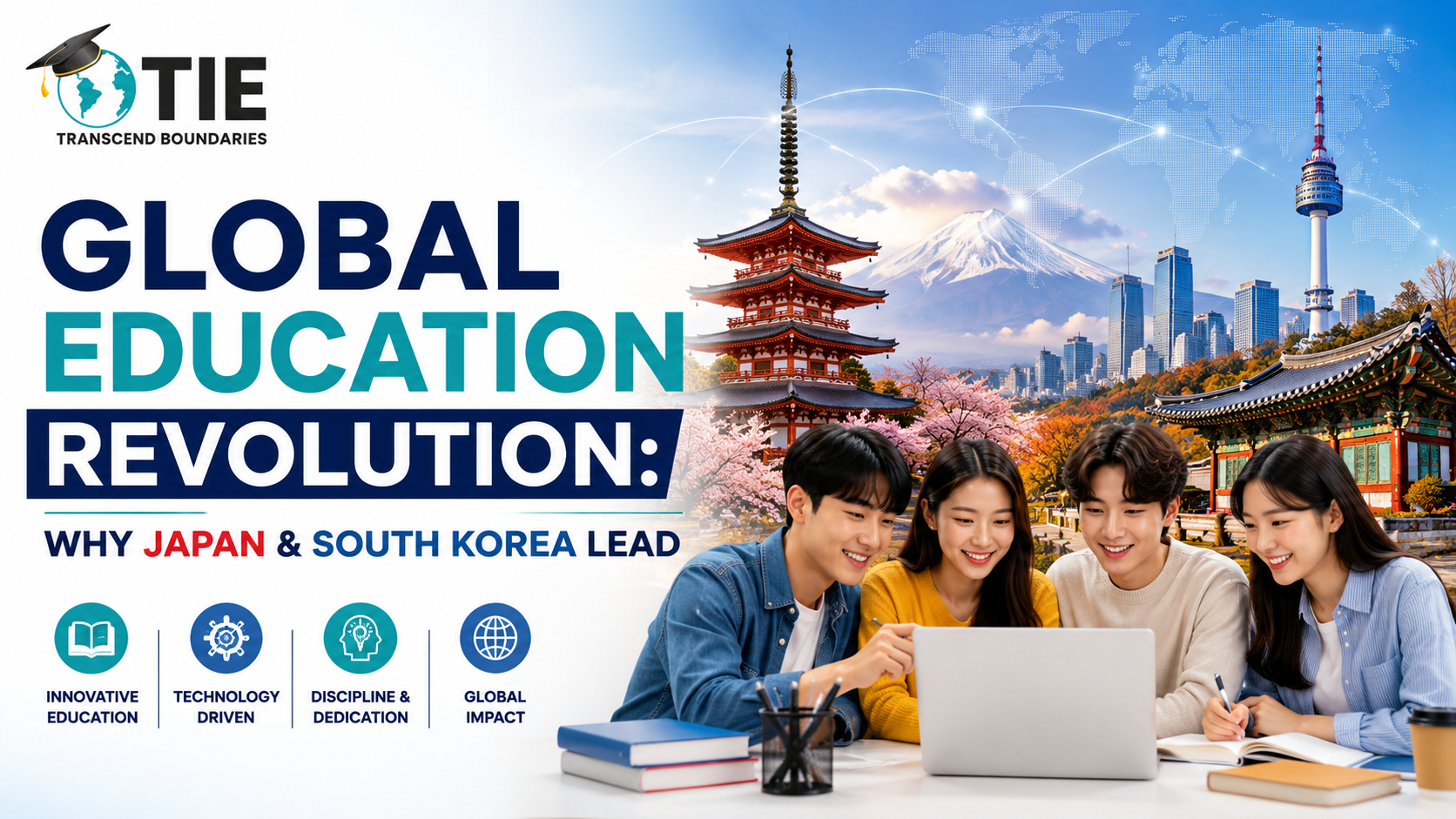
Global Education Revolution: Why Japan & South Korea Lead?
Taksheela Team
Taksheela Institute of Education
A New Frontier for Global Education
A growing number of international students are choosing East Asia—not just for its culture, but for its strategic value.
Why East Asia, and Why Now?
Japan and South Korea are emerging as global education powerhouses. Why?
They offer more than just academic excellence—they offer real-time exposure to diplomacy and regional conflict. Students are learning from events as and when they happen.
If you're ready to rethink where the world learns global affairs, Japan and South Korea might just be the classrooms of the future
The Strategic Edge of Studying in East Asia
If you're studying international relations, foreign policy, or global security, East Asia is your way to go. Japan and South Korea sit at the center of the world’s most intense diplomatic flashpoints—making them ideal for students who want to learn by being there.
A Live Geopolitical Laboratory
Proximity to China, North Korea, and Taiwan gives students direct access to real-world diplomacy.
Ongoing U.S.-China tensions are clearly visible across trade, tech, and military domains.
South Korea's relationship with North Korea gives students constant case studies in dialogue and resilience.
Japan’s leadership in the QUAD alliance and Indo-Pacific strategies shows students how middle powers navigate major alliances.
Real-Time Learning Opportunities
Students in Japan and South Korea witness:
Military exercises and regional security drills
Bilateral summits and diplomatic negotiations
Sanctions, economic shifts, and international responses
Live media coverage of protests, elections, and policy changes
Why It Matters
Students don’t just study foreign policy in theory—they experience it first-hand.
Students build skills in risk analysis, strategic thinking, and cross-cultural diplomacy.
Exposure to real-time geopolitical developments enhances academic understanding and professionalism of students.
Why Japan and South Korea Are Ideal for Immersive Global Education
Japan and South Korea offer a combination of academic excellence, political significance, and cultural appeal, making them the perfect destination for students wanting to pursue global affairs or political science.
Political Stability and Global Relevance
Both nations are stable democracies with strong legal institutions.
They maintain strategic alliances with the U.S., G7, and multilateral bodies like the UN.
Their foreign policies are active and deeply tied to major international trends.
Safe, Connected, and Globally Oriented
Highly developed infrastructure, public services, and digital access.
Growing number of English-medium programs at leading universities.
Campuses with students from all countries and continents alike.
Excellence Beyond Politics: Leading Academic Disciplines
Japan excels in:
Robotics and Automation
Artificial Intelligence (AI)
Peace Studies and Public Policy
Technology and Innovation Management
South Korea leads in:
Digital Design and Smart Cities
Media and Communication Studies
Science, Technology, and Policy
Cybersecurity and Digital Governance
These programs allow international relations students to combine STEM and policy to address real-world global issues, gain interdisciplinary exposure that strengthens employability and strategic thinking. This in turn increases understanding of technology and diplomacy.
Experiential Fieldwork: Learning Beyond the Lecture Hall
In East Asia, the classroom extends far beyond academic buildings. Immersive learning in Japan and South Korea offers students something few traditional programs can: direct engagement with political systems, diplomatic actors, and civil society movements.
How?
Field assignments that include Interviews with career diplomats, policy advisors, and local officials, visits to embassies, parliaments, and international organisations and participation in track-two diplomacy workshops and simulation exercises.
Students analyse real-time developments such as elections and voter behavior, defense drills and emergency preparedness protocols and social movements, protests, and civic engagement initiatives.
Real Collaboration, Real Impact
Projects often involve:
Joint research with local students and faculty
Engagement with NGOs, think tanks, and UN field offices
Policy analysis on live case studies like sanctions, trade policy, or refugee flows
Why It Matters for Aspiring Leaders
Builds cross-cultural competency
Enhances on-the-ground research skills
Trains students in evidence-based policy formulation
Offers firsthand insight into regional power dynamics
This is where theory meets reality. Students not only study diplomacy—they live it.
Featured Universities and Programs
Japan and South Korea don’t just offer traditional political science or international relations programs—they're also global leaders in technology education. This makes them ideal for students who want to combine policy understanding with tech fluency, preparing for careers in digital diplomacy, global innovation policy, and strategic tech governance.
Leading Universities in Japan
Top Universities in South Korea
Why This Matters
Students get to work and research in top-notch laboratories.
Learn how AI, automation, and smart systems are shaping diplomacy, defense, and governance.
Build skills that combine technology and geopolitics.
What Sets Japan and South Korea Apart?
1. Real-Time Geopolitical Exposure
Japan and South Korea are placed in the middle of the diplomatic relations of East Asia. Whether it's North Korean missile drills or U.S.-China trade tensions, students witness global events in real time.
2. Dual Strength in Tech and Policy
These nations lead globally in automation, AI, robotics, and digital design, providing students with an opportunity to blend international relations with emerging technologies.
3. Strategic Collaboration between Industry and Academics
Top universities in both countries have strong ties with their governments, global NGOs, and industry giants such as Toyota, SoftBank, Samsung, and LG. This allows students to engage in practical research.
4. English-Medium Programs with Global Intent
The primary focus of these countries is internationalisation. Due to which, many universities now offer English-taught courses in international affairs, diplomacy, and STEM. This opens access without sacrificing academic rigour, making Japan and South Korea more inclusive for Indian and other global students.
Comparative Table: Japan & South Korea vs Other Popular Destinations
Why This Matters for India's Global Education Strategy
Indian institutions can forge partnerships with East Asian universities for short-term field programs.
These destinations help train the next generation of Indian diplomats, policy analysts, and global tech leaders.
Japan and South Korea provide balanced returns: strategic learning, global networking, and employability.
Culture as Curriculum
Before students even set foot on campus, many have already been deeply influenced by Japan and South Korea—not through textbooks, but through pop culture.
Japan: Anime as a Global Education Gateway
For many, our first meeting with Japan is through anime. World-renowned studios like MAPPA, Studio Ghibli, and Toei Animation have created global headlines such as Jujutsu Kaisen, Attack on Titan, Spirited Away, and One Piece, giving global audiences an insight into Japan.
South Korea: K-pop and its global impact
Groups like BTS and BLACKPINK, backed by major entertainment agencies such as HYBE, YG Entertainment, and SM Entertainment, have built up huge global fan bases. Their music, choreography, and storytelling have inspired people worldwide to learn about the Korean language, history, and contemporary society.
For students pursuing fields such as global communications, cultural diplomacy, or digital marketing, South Korea has become a hotspot, offering academic depth as well as an influential pop-culture scenario.
Japan & South Korea vs. the West: A Soft Power Comparison
While countries like the U.S., Germany, or Dubai offer academic and career-driven appeal, few can match the emotional resonance or pop-cultural pull of Japan and Korea.
Why This Matters for Global Education
Students already invested in a culture are more likely to thrive academically within it.
Cultural immersion enhances language learning, regional studies, and coursework in global diplomacy.
For Indian students, this can break down social barriers and open up careers in digital media, international communications, and cultural diplomacy.
Role of Japan and South Korea in Shaping Next-Generation Global Leaders
Innovative Education Models: Both countries emphasise interdisciplinary learning, blending technology, policy, and cultural understanding.
Global Mindset Development: Exposure to unfamiliar landscapes helps develop adaptability, critical thinking, and cross-cultural communication.
Real-World Problem Solving: Through internships and collaborations with government agencies and multinational firms, students gain firsthand experience addressing complex challenges, from technological innovation to diplomacy.
Strong Alumni Networks: Graduates from top universities in these countries often join powerful international organisations and government bodies, creating networks that support global cooperation and innovation.
Taksheela Institute of Education encourages students to explore global education opportunities and consider destinations such as Japan and South Korea for their academic and career journeys. By gaining exposure to international relations, technology, innovation, and cultural diplomacy, students can develop a global perspective and prepare themselves for future opportunities in an increasingly interconnected world.
The Future of Global Education Lies East
South Korea and Japan are countries that seamlessly combine cutting-edge academic programs like robotics and AI with media studies and international communication, with cultural experiences that inspire both personal and intellectual growth.
Their modern infrastructure, world-class universities, and growing ecosystem of English-medium programs make them ideal for students seeking real-world exposure.
Step out of your comfort zone, and you'll find that immersing yourself is the first step toward unlocking your greatest potential.
Free MBBS Counselling
Find the Right Country for Your MBBS in 2026
Our MBBS specialists analyse your NEET score, budget and career goals to recommend the right university — at zero cost to you.
Related Articles
Planning your study abroad journey?
Get free expert counselling from Taksheela — trusted by thousands of Indian students for admissions, visas, and test prep.
You May Also Like
More Study Abroad & Education Guides
AI Just Got Accepted Into Your Child’s Classroom — But Who’s Training It?
01 Aug 2025 · 10 min